
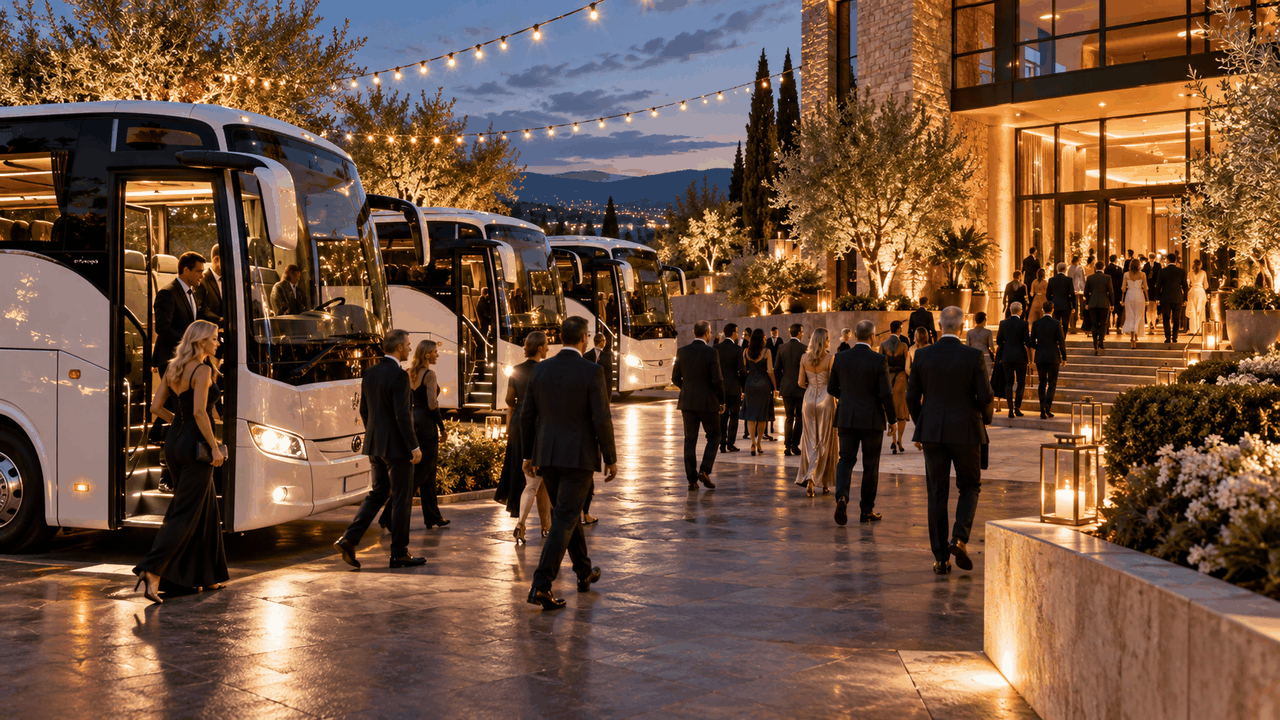
Designing an event shuttle plan
Start with demand: where are guests staying, when do they need to arrive and how quickly must the venue clear afterwards? For larger events, several scheduled departures can work better than one vehicle trying to carry everyone. The transport plan should include loading locations, vehicle holding areas and an organiser contact.
Hotels and venue access
A street address alone is not always enough for a stadium, convention centre or resort. Ask the venue for its bus or coach access instructions and send those details with the booking. In busy districts, the vehicle may need to load at a designated bay rather than directly outside the main entrance.
Vehicle mix
A combination of coaches and minibuses can serve different hotels or VIP groups. Large coaches are efficient for high-volume movements, while minibuses can cover smaller properties and late arrivals. Build the fleet around the passenger flow rather than assigning the same vehicle size to every route.
After the event
Return transport often creates the biggest pressure because many people leave at the same time. Use clear meeting points and departure windows, and tell passengers which vehicle or hotel zone they belong to. For nightlife or wedding events, consider staggered late departures if guests will not all leave together.
Quote information
Provide event date, estimated passenger count, hotels, venue, required arrival time and return window. If there are rehearsals, setup crews or VIP movements, list those separately so they are not hidden inside the main guest shuttle plan.