
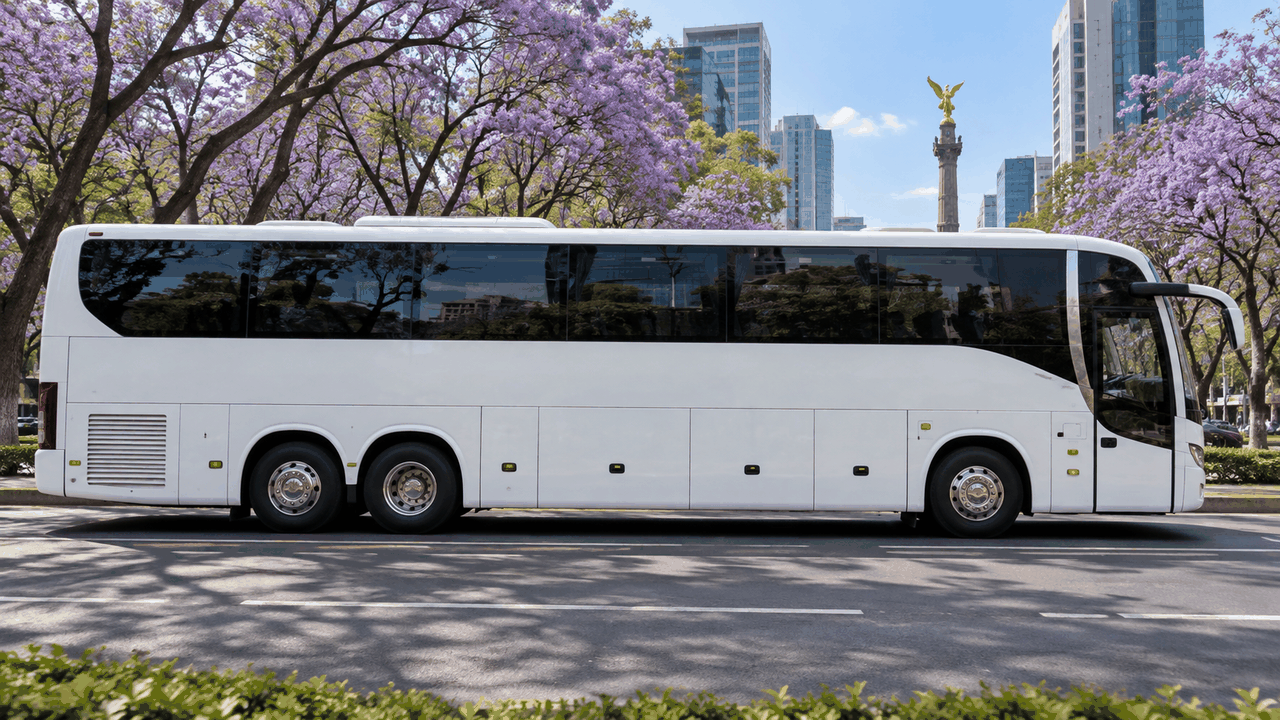
When a coach is the right choice
A coach is usually the practical option when the group is large enough that splitting into several smaller vehicles would complicate the itinerary. It gives organisers one passenger manifest, one departure plan and one main point of coordination. Full-size coaches are commonly used for conference delegates, school groups, tour series, wedding guests, sports teams and longer inter-city travel.
Mexico touring considerations
Long routes need realistic scheduling. Journeys between states can involve toll roads, urban congestion and rest requirements, while resort and heritage destinations may have designated coach loading areas. Build time into the itinerary for passenger comfort and do not assume that a large coach can stop directly outside every hotel, museum or historic centre.
Luggage, amenities and vehicle specification
Tell the booking team how much baggage the group carries and whether special equipment is involved. Requested features such as air conditioning, reclining seats, Wi-Fi, USB charging or onboard toilets should be stated at enquiry stage because equipment varies by operator and vehicle. The exact vehicle specification should be confirmed before travel rather than assumed from a generic category image.
Airport, event and corporate work
Coaches can support simultaneous airport arrivals, delegate movements between hotels and venues, gala dinners, factory visits and multi-day incentive programmes. For major events, use timed dispatch waves and clear passenger labels so each vehicle can leave without waiting for the entire group.
Requesting a coach quote
Send dates, passenger count, pickup and drop-off points, approximate luggage, operating hours and all planned stops. For tours, include hotel nights and attraction reservation times. For conferences, add venue loading instructions and any repeat shuttle periods. A complete brief makes it easier to compare options on the same basis.