
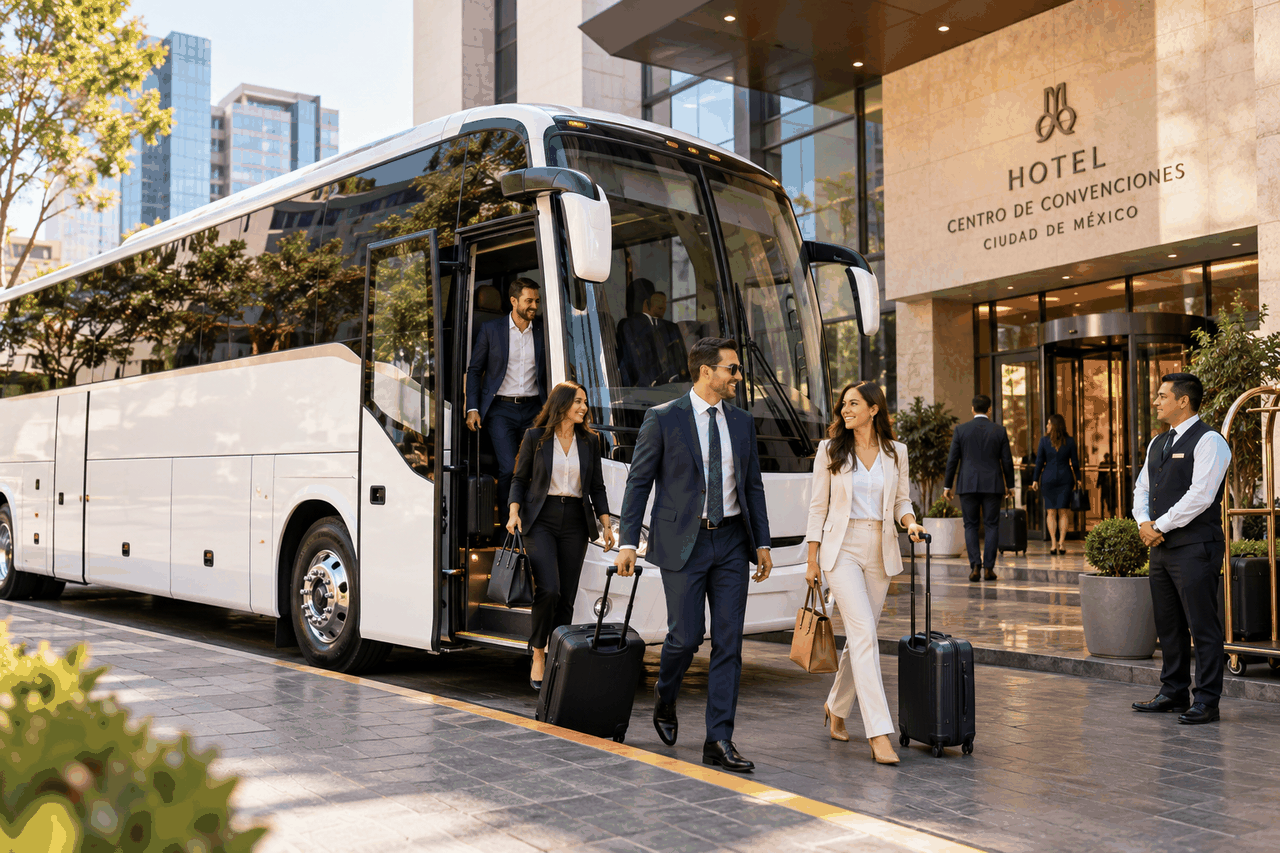
Business travel that runs to a schedule
Corporate transport is less about sightseeing and more about sequence. Flights, hotels, meeting starts, dinners and venue access all have fixed expectations. A useful plan identifies each movement, who is travelling, the required arrival time and a named contact at the pickup point.
Conferences and conventions
Mexico City, Guadalajara, Monterrey, Cancún and Los Cabos regularly host large business groups. Depending on the event, transport may involve airport arrivals, hotel-to-venue shuttles, off-site dinners and final departures. Using route groups and dispatch windows can be more reliable than expecting every delegate to board one vehicle at once.
Executive and VIP movements
Smaller executive groups may prefer cars, MPVs or minibuses, while conference groups often need coaches. State any privacy, branding, luggage or waiting requirements when requesting the quote. Vehicle features should be confirmed rather than assumed.
Operational information
Share a manifest or at least passenger numbers per movement, hotel names, venue entrances and a contact person who can make decisions on the day. For airports, add flight numbers. For large venues, use the organiser’s designated coach entrance rather than a generic street address.
Multi-day programmes
For incentive travel or roadshows, combine business and leisure movements into one schedule. A consistent transport plan reduces duplicated transfers and gives the organiser a clearer view of driver hours and vehicle availability across the programme.